
Naming the Grasses
My Orcadian Column for October

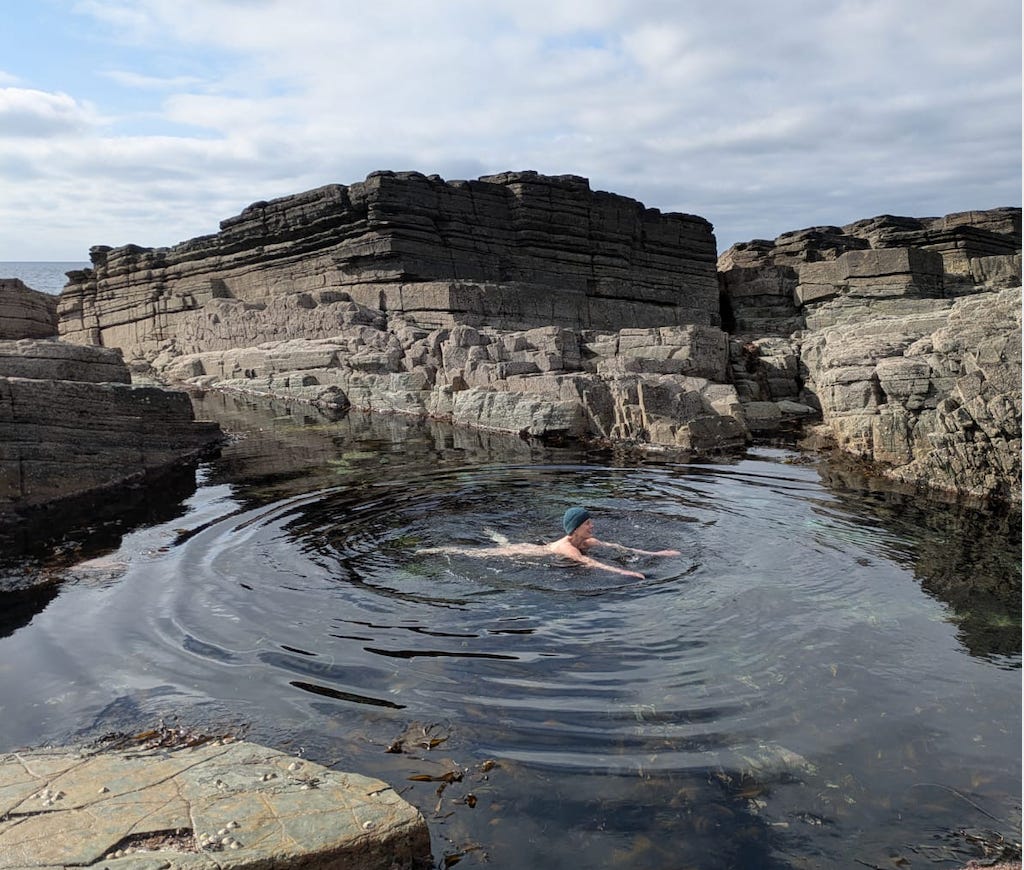
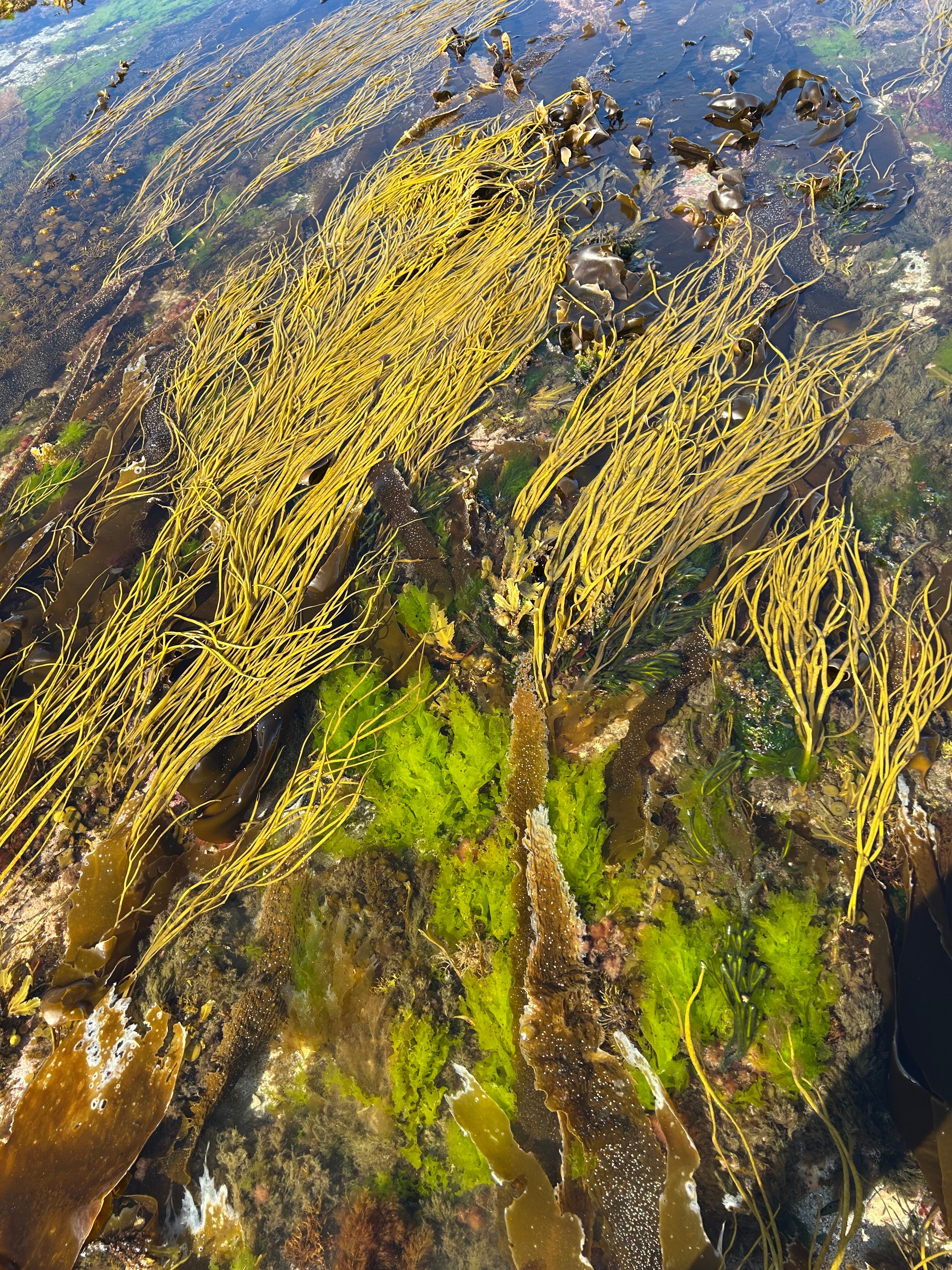
In the centre of a deep cold rockpool, I have a revelation. At the end of a warm day, I go down to the chain of pools where we swam as kids. It’s low tide, the water has warmed slightly over the afternoon. I slip in without too much hesitation, swim slowly and look around. After spending much of last year studying seaweed on Papay, I can now see what a fantastic array is here: large swaying sugar kelps submerged, giant ponytails of thongweek dancing on the surface, the walls of the pool thick with the red seaweeds including dulse and carrageen, as well as various wracks. There is even some pepper dulse - ‘the truffle of the sea’ - and I break off a piece for a nibble. It’s a phycologist’s (scientists who study algae) dream. I am aware of the great beauty and my great luck, a mermaid in my own pool.
Annie Dillard talks about how a writer has to “give voice” to “your own astonishment”, to follow the subjects that call to you. For the last two years, for me, it has been seaweed but until right now in the rockpool, I have never quite understood why. I have a moment of clarity: Abundance of seaweed is deep in my memories, I have formative sensory experiences that I need to examine and revisit.
The next week I visited the Pier Arts Centre to see Buss o Gress / Tuft of Grass by Rebecca Marr and Valerie Gilles, looking at grass species and their traditional uses. A phrase struck me: “This exhibition is about remembering something at the edge of our memory”. It feels the same with seaweed, learning about them is like uncovering something I almost already knew. At home, I browse their beautiful book When the Grasses Dance, with poems and photos about individual species of grass. “Grasses have been overlooked in our society’s state of plant blindness”, the introduction states. The diversity of grasses is being remembered just as it is being lost. Monocultures of mainly rye grass dominate the islands, producing super livestock and bringing prosperity but we also know that biodiversity is declining.
A few days later, I had a visit at the farm from local naturalist Tim Dean, author of The Orkney Books of Birds and of Wildflowers and The Wildlife of Orkney’s Coasts and Seas, three fantastic volumes illustrated by Tracy Hall and Anne Bignall which are never far from my desk. I’d invited him to have a look at the land I have inherited from my Dad. We walked slowly along the shore fields, stopping to examine and identify the low-lying plantlife. Tim kindly shared his knowledge, pointing out that the yellow flowers all over the cliff field are not dandelions but Autumnal Hawkbit, finding Sorrel, Thrift and different types of Plantains including Buck’s Horn. Up on the outrun there is quite a bit of heather. The land could probably be classified as ‘coastal heath’, which is found in exposed locations where the vegetation is strongly influenced by salt spray.
I have walked over these fields all my life but have never known the names of all the grasses and plants. I find it very powerful to begin to learn. I have a feeling of things coming into focus, what was an indistinct mass gaining shape. Putting names to things means we are able to appreciate and quantify the richness - and to protect these species-rich grasslands and seashores. There is value in following your own enchantment, your idiosyncratic interests, in looking closely. Primula scotica (The rare Scottish Primrose) has grown on the outrun in the past but I haven’t found any for years. Tim encourages by saying it should still be in the seedbank. I hope that with the right management, including reducing grazing, these special plants might reappear and thrive.
Loved reading this.
Maybe a whole new generation can discover and learn to name and love seaweeds and grasses along with the other “Lost Words” for plants and birds and animals found in the book by Robert Macfarlane and Jackie Morris. And maybe we shall all learn to sing new Seaweed and Grasses Spell Songs.
Yes and yes… ❤️ I have thought about similar things, the joy of learning the names. https://beachbooks.blog/2025/08/03/the-names-of-things/