
Writing Joy

Joy comes in unexpected moments. Sometimes it’s happening on the right combination: a train journey and a good book, a cigarette after a nervewracking event. This week it was overhearing a surreal conversation between my sons; it was three ideas coming together to make a piece of writing.
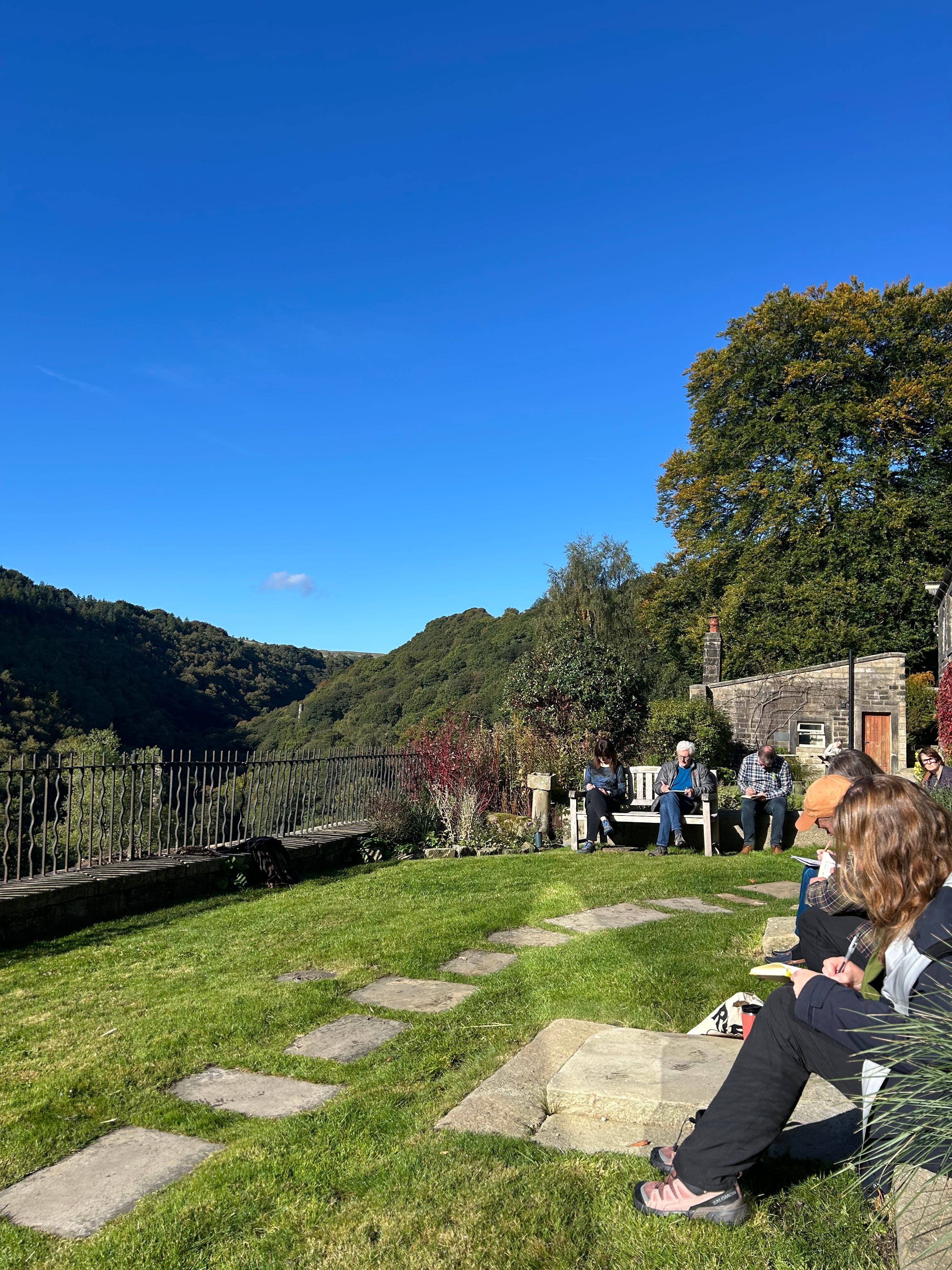
I worked away last week, tutoring at the creative writing centre up on the hillside, surrounded by trees. Days of perfect autumn, crisp mornings and golden light. I’ve done a few of these courses now and each time I think it is a risky endeavor. It feels precarious bringing together a group of people who want to write about their lives, who are often just beginning to find their voices and tell their stories, who are raw and emotional. And these brave people are put together with tutors who are neither trained counselors nor teachers, but have written a book or two. And we all work and eat and live together. It’s a social experiment filled with danger and possibility - a sweet spot for writing.
Perhaps to mitigate some of the risk, one of the things that I say to the writers on the first day is that they don’t have to write about trauma. Many people are there to tackle a particular difficult aspect of their lives - losses, illnesses, dark legacies - and it can be useful as a writer to go where the pain is but it can also be helpful to go to the joy.
I talk to them about joy as resistance and pleasure as political. I read from Pleasure Activism: The Politics of Feeling Good by Adrienne Maree Brown: “Pleasure activism is the work we do to reclaim our whole, happy, and satisfiable selves from the impacts, delusions, and limitations of oppression and/or supremacy.” We talk about the power to be found in joys free from commerce: pleasure in nature, in sex, in friendship. We talk about balancing light and shade in our work. And I asked them to write and I’m silenced by fluent and lovely pieces on food and love and sailing at night.
Ross Gay, in his book of daily essays on delight, writes: “It didn’t take me long to learn that the discipline or practice of writing these essays occasioned a kind of delight radar. Or maybe it was more like the development of a delight muscle. Something that implies that the more you study delight, the more delight there is to study.” Taking this idea, I tune into when I feel good these last few days. I notice the difference between pleasure (a sensory thing, the segment of orange in the sauna), joy (a broader feeling, often in the mornings before the day gets on top of me, a surge of well being, a sense of my own good fortune) and contentment (more lowkey, everyone in the household calm and happily occupied).
I’ve written two books centred on difficult experiences: addiction and heartbreak. In 2023, however, I wrote a monthly column for Caught by the River about doing things outdoors with children and it was my idea with these columns to be guided by joy. My experience of motherhood had been generally positive and I wanted to share the hope and happiness I found in picking berries or planting trees with my boys. But I noticed that I didn’t get as much feedback with these type of pieces. Am I right in thinking that readers want me to suffer? Or that in order to write contentment I have to offset it with tribulation? This is trap of the narrative arc.
On the last night of the course, after an intense few days of working and laughing together, everyone reads a piece of new work, everyone going into emotionally hard places: there are dead dads and childhood pain. Good writing usually involves some sort of risk, whether personal or artistic. But we had created some safety to share these things by knowing that we all have joys as well as sorrows.
I’m just reading Richard Holmes Footsteps and he notes this while writing about Mary Wollstonecraft in post revolutionary France. When she was happy she wrote little, so it’s easier to see her life as just tragedy. But he imagines for her some domestic bliss, with her child.
It sounds like you create the right creative conditions with the group you were tutoring Amy. Trust in these kind of settings is the ultimate thing 😊🙏